
What if helping the planet felt easy and addictive (in a good way)?
“I want to help… but I don’t know what I can actually do.”
The Experience
Micro-actions that feel doable
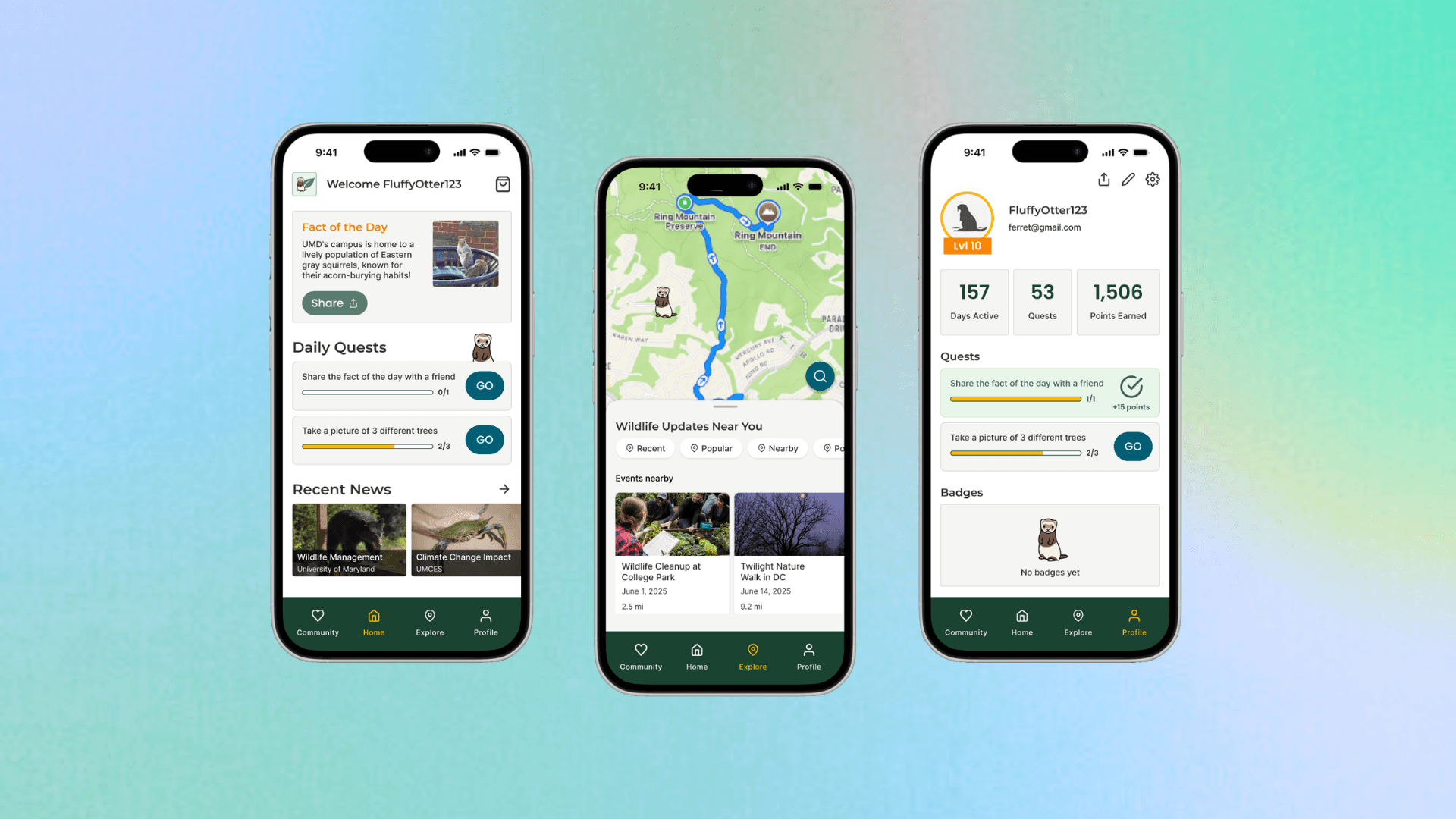
Users see daily wildlife facts, nearby conservation issues, and a quick quest they can complete in under 60 seconds.
They can take simple actions to make impact visible and achievable.
From Passive Action to Camera-Based Action
Users act in the moment and learn about local nature through camera-powered, location-aware quests.
Instead of deciding what to do, they now have actionable steps to grow awareness and contribute positively.
This screen was developed after the hackathon to further refine and expand the concept.
Beyond Quests
Map of local events for participation
Badges & rewards tied to impact (unlock species you’ve helped)
Real-world shop with eco-friendly rewards
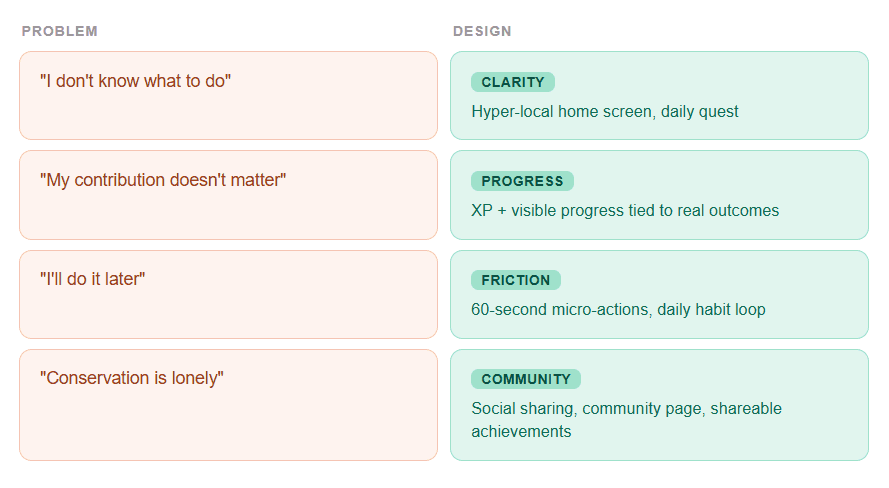
Translating User Needs into Design Solutions
I based every feature off of the principle that behavior change happens when repeated actions reshape neural pathways (neuroplasticity) and become part of identity.
Design Decisions Under Constraint
Time constraints and 1 designer means tradeoffs
I primarily focused on the core user flow of discover, act, and earn/impact to manage the scope.
Instead of abstract badges and rewards existing for the sake of being, well, rewards, I designed rewards to map directly to the species being protected and show the user the impact they're making.
Result
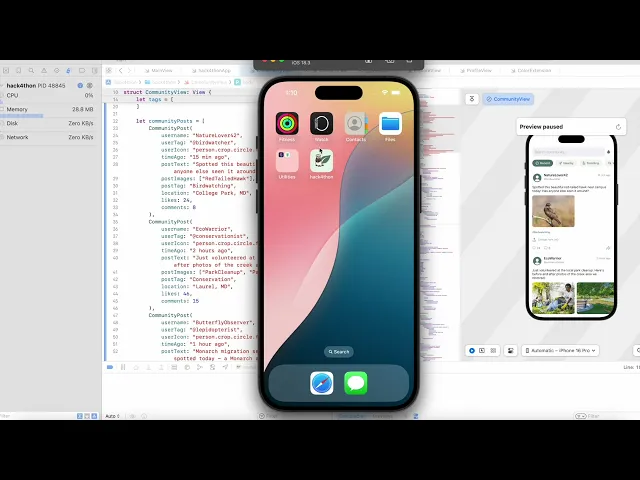
In 24 hours, I designed 8 interactive screens solo in Figma with full end-to-end flows. The designs were handed off to my developer teammate who built a working prototype in Swift and Xcode that was demo-ready and functional at judging. We won Best Overall Hack with highest scores in visual design and social good.
This was just the first 24 hours. But what if it went beyond that?
If this were to become a real product, I would focus on key features and measure success through key engagement and retention metrics, including quest completion rate to assess task follow-through, sharing rate to evaluate social and community participation, camera opens as a signal of active feature use, and user retention across Day 1, Week 1, and Month 1 to understand sustained behavior change over time.